About
I work where quantum computing meets neuromorphic computing: building quantum versions of the spiking neurons brains use, and finding out what they can learn.
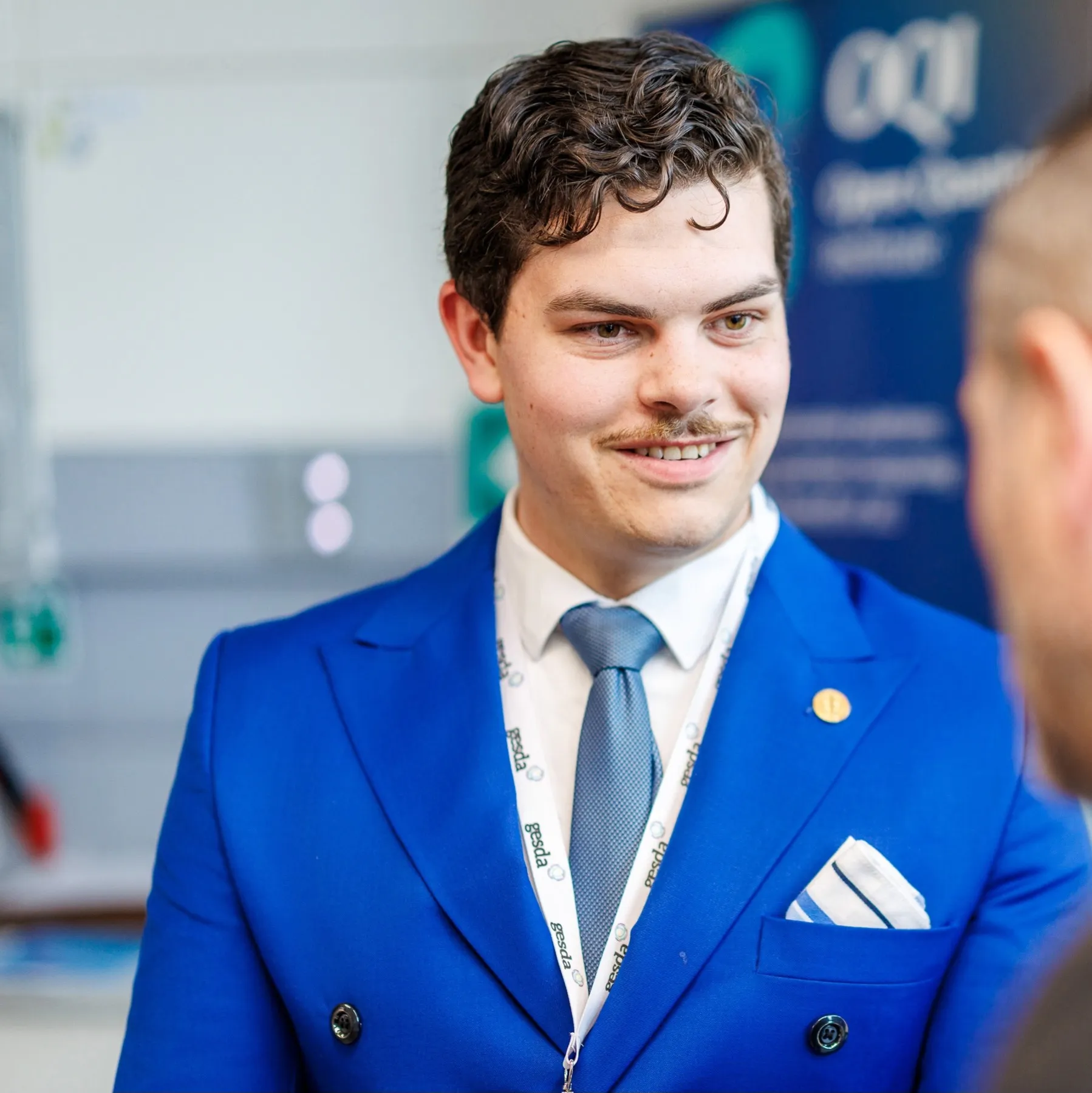
I am a postdoctoral researcher in the Quantum Research Group at Stellenbosch University, working with Francesco Petruccione, and at the National Institute for Theoretical and Computational Sciences (NITheCS).
Two limits drive the work. Transistors are nearing the size of atoms, where quantum effects make them unreliable, and conventional computers spend much of their time and energy moving data between memory and processor. Quantum computing is one answer to the first. Neuromorphic computing, which copies the way brains compute with short pulses and very little power, is an answer to the second. Each is strong where the other is weak, and my research asks how to join them into new algorithms and architectures.
How I got here
I did not start in computing. My first degrees, at the University of the Witwatersrand, were in astronomy, astrophysics and theoretical physics. A NITheCS internship with Francesco Petruccione and Ilya Sinayskiy introduced me to quantum computing, and it grew into a master's at the University of KwaZulu-Natal, where I used the theory of open quantum systems to model the noise in IBM's quantum computers.
My PhD at Stellenbosch, Quantum Neuromorphic Computing, brought quantum computing to spiking neurons and produced a new quantum neuromorphic architecture. Since then my interests have widened to machine learning and quantum algorithms, and to how AI tools are changing the way scientists work, which was the subject of my NITheCS colloquium in September 2026.
Beyond my own research
I am on the organising committee of QTML 2026, the tenth International Conference on Quantum Techniques in Machine Learning, in Stellenbosch from 6 to 11 December 2026. I review for The Journal of Supercomputing and Quantum Machine Intelligence. And I teach short practical courses for NITheCS on the tools computational research runs on, from Git and Linux to running language models on your own machine; the recordings are free to watch.
Education
Thesis: Quantum Neuromorphic Computing
Master's, University of KwaZulu-Natal
Open quantum systems models of the noise in IBM quantum computers
BSc Honours and BSc, University of the Witwatersrand
Astronomy, astrophysics and theoretical physics